
Welcome To Slotking India Storage System Pvt. Ltd.
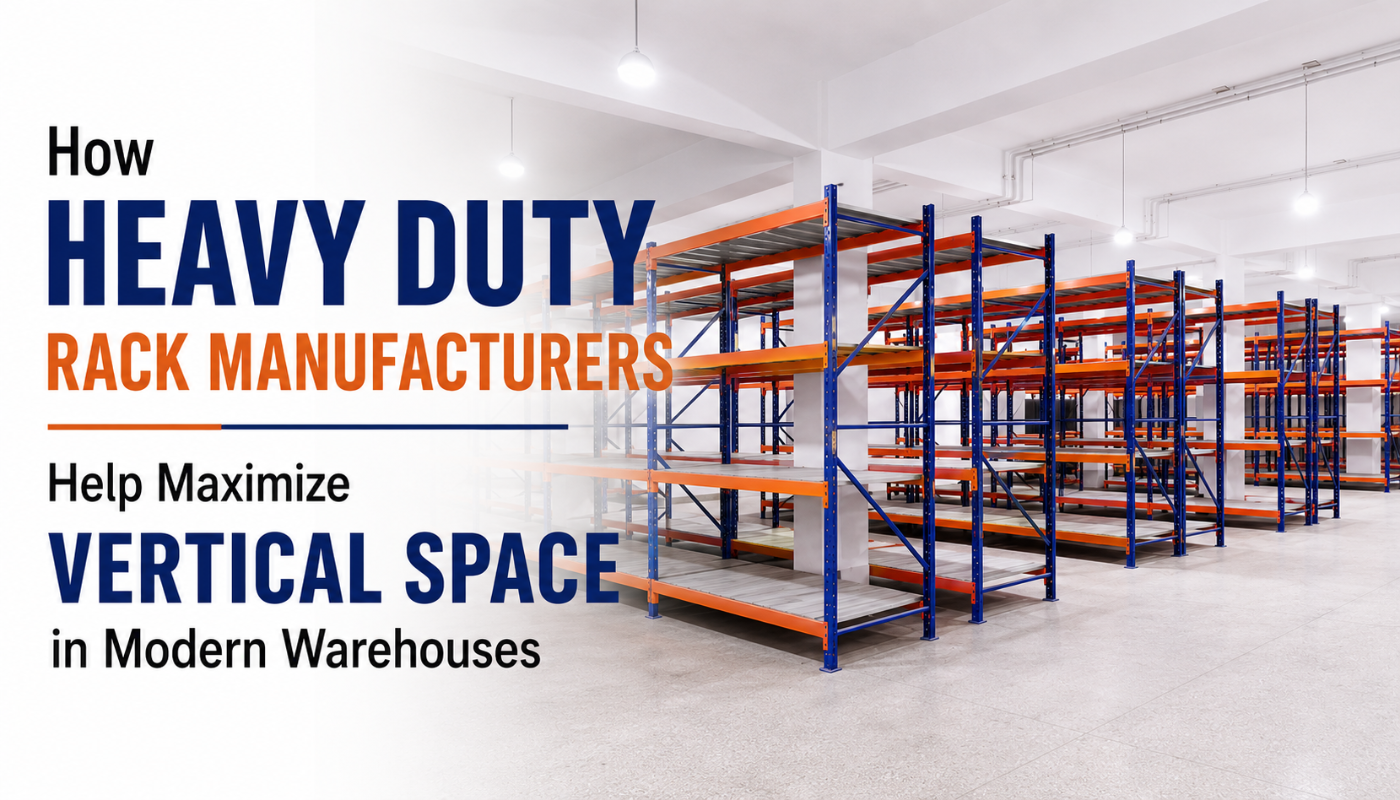
Walk into any busy warehouse, and you'll notice the same problem crowded aisles, overflowing floor space, and goods stacked haphazardly wherever room can be found. Yet look up, and there's often 20 to 30 feet of completely empty air. That gap between the floor and the ceiling represents thousands of square feet of storage that most businesses never use.
Working with the right heavy-duty rack manufacturers is what turns that wasted height into structured, productive storage. And for businesses feeling the squeeze of growing inventory, it's often the most practical solution available without relocating or expanding the building.
The issue isn't always the size of the warehouse, it's how the space gets used. Most facilities store goods only at ground level or one shelf up, leaving the majority of vertical space untouched. As inventory grows, the floor fills up fast, aisles get blocked, and operations slow down.
Renting a bigger space sounds like the fix, but it comes with high costs and long lead times. A far smarter approach is to restructure storage vertically within the existing building. This is exactly where partnering with trusted Heavy Duty Rack Manufacturers pays off for businesses that make this shift, with properly engineered racking systems designed for height, regularly report doubling or tripling their usable storage without changing location.
Not every rack is suitable for vertical storage. Light shelving bends under load. Poorly designed uprights flex at height. For storage that goes high safely, the engineering behind the rack matters as much as the steel itself.
Experienced heavy-duty storage rack manufacturers design racking systems that distribute weight evenly across uprights, beams, and floor anchors. High-tensile steel maintains its rigidity under sustained loads at height. Beam locking systems prevent accidental dislodging. Every component works together to keep goods stable, whether they're stored 6 feet up or 22 feet up.
This level of structural precision is what separates a proper heavy-duty racking system from a basic shelf unit that happens to be tall.
For warehouses that handle goods on pallets, selective pallet racking remains the most reliable way to go vertical. Each level is independently accessible by a forklift or reach truck, meaning staff can retrieve goods from any height without disturbing other stock.
As a system, pallet racking scales well. Bays can be added, levels can be increased, and configurations can shift as inventory needs change. Heavy-duty pallet rack manufacturers build these systems to carry significant loads per level, often 1,000 kg or more per bay, making them suitable for dense, heavy inventory like automotive parts, industrial goods, or packaged food products.
For high-density storage of uniform SKUs, drive-in pallet racking pushes capacity further by eliminating individual aisle access between bays. The trade-off is a last-in-first-out retrieval pattern, which suits businesses with large quantities of the same product.
One of the most effective and often underestimated ways to use vertical space is by installing a mezzanine floor. Rather than simply adding more rack levels, a mezzanine creates an entirely new working platform inside the warehouse supported by steel columns.
Racking systems installed both below and above the mezzanine effectively double the storage capacity of the building. The upper level can hold additional racks, packing stations, or office space. The lower level continues normal operations. All within the same four walls, same lease, same footprint.
For warehouses with ceiling heights above 20 feet, a mezzanine combined with racking is consistently one of the highest-return investments available.
The quality of the manufacturer determines how long the system lasts, how safe it is, and how well it performs under real operating conditions. A few things matter more than anything else:
Steel grade and fabrication quality - High-tensile mild steel holds its shape under load for years. Cheaper steel warps, weakens, and fails over time.
Surface treatment - Powder coating or galvanizing protects against rust, especially in humid or cold environments. This directly affects rack lifespan.
Site-specific design - Generic catalog racks rarely fit a warehouse's actual constraints. A manufacturer that conducts proper site surveys and designs around your specific ceiling height, floor conditions, and inventory will deliver far better results.
Installation and after-sales support - A rack improperly installed is a safety risk regardless of how well it's built. Proper anchoring, column protection, and load labeling need to be part of the service.
Maximizing vertical space is no longer a luxury, it’s a practical necessity for warehouses dealing with growing inventory and fixed floor area. The difference between a facility that runs smoothly and one that's constantly struggling often comes down to how well the storage system is designed and built.
Pallet racking, long span racks, and mezzanine floors each solve a specific part of the problem. But none of them deliver results without the right manufacturer behind them, one that uses quality steel, designs around your actual space, and stands behind the installation.
If your warehouse ceiling is sitting empty while your floor is packed, that's not a space problem. It's a racking problem. And it has a straightforward solution.
Slotking India Storage System Pvt. Ltd. has been manufacturing and installing heavy-duty racking systems across India for years, serving businesses that can't afford downtime, poor quality, or a system that fails under pressure.
Whether you need pallet racking, long span heavy duty racks, mezzanine floor, or a full warehouse storage redesign, their team will assess your space and build a solution that fits not just on paper, but in practice.